
Justice Rajan Roy shares Judicial Insights with RPNLU Students in ‘Beyond Judgments’ Interaction Series
Justice Rajan Roy shares powerful insights on judicial independence, integrity, and the evolving justice system during RPNLU’s ‘Beyond Judgments’ Interaction Series. Scroll down to read more!
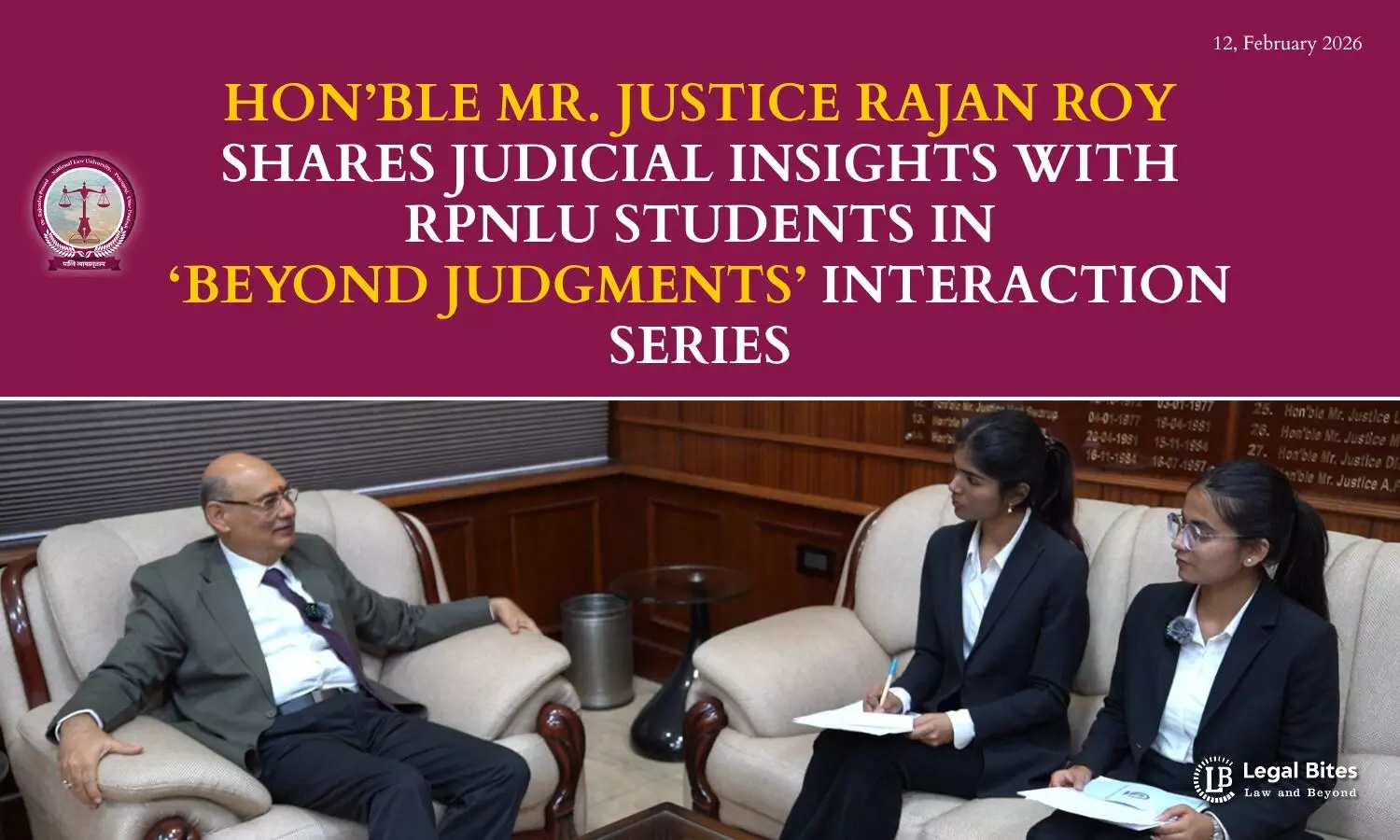
Prayagraj, 11 February 2026 – Dr. Rajendra Prasad National Law University (RPNLU), Prayagraj organised a distinguished interaction with Hon'ble Mr. Justice Rajan Roy, Senior Judge at the Lucknow Bench of the Allahabad High Court, as part of its flagship initiative ‘Beyond Judgments’.
Held under the inspiring guidance of Hon’ble Vice-Chancellor Sr. Prof.(Dr.) Usha Tandon, the session offered students a rare opportunity to engage directly with a sitting constitutional court judge and gain valuable insights into judicial philosophy, integrity, and the evolving justice system in India.
During the interaction, Hon'ble Mr. Justice Rajan Roy reflected on his journey from being a law student at Lucknow University to adorning the Bench of the Allahabad High Court. He observed that the true education of a lawyer begins and matures inside the courtroom, where practical exposure shapes legal acumen beyond textbooks.
His Lordship acknowledged the critical role played by his seniors at the Bar in instilling discipline, humility, and the art of keen observation. Sharing a personal anecdote, he recalled practising arguments before a mirror on his grandfather’s advice an exercise that helped him build confidence and clarity. He described how such small but consistent habits leave a lasting impact on professional growth.
Advocacy vs. Adjudication: Rising Above Partisanship
Speaking about the transition from advocacy to adjudication, Justice Roy explained the fundamental shift in perspective required. While lawyers argue from a partisan position, judges must rise above all sides and function strictly within constitutional limits.
He emphasised that judicial independence flows from inner strength, especially in an era marked by social media scrutiny and instant public opinion. Decisions, he remarked, must be delivered without fear or favour, guided solely by constitutional values.
Integrity, Judicial Reasoning, and Constitutional Boundaries
On the issue of integrity and judicial reasoning, His Lordship underlined that judgments must remain firmly anchored in facts, evidence, and law. Emotional considerations or external pressures, he noted, cannot influence adjudication.
Addressing socially sensitive matters, including caste-based political mobilisations, Justice Roy stressed the importance of balancing social realities with constitutional discipline. Courts, he reiterated, must respect the functional boundaries of the legislature and the executive while safeguarding constitutional principles.
Access to Justice in Uttar Pradesh: Structural Challenges
Highlighting systemic challenges, Justice Roy pointed to the low judge-to-population ratio in large states such as Uttar Pradesh as a significant concern. He advocated a comprehensive approach to improving access to justice, including:
- Increased judicial appointments
- Strengthening of Alternative Dispute Resolution (ADR) mechanisms
- Effective case-filtering systems
- Strict action against frivolous litigation
According to His Lordship, these reforms are essential to ensure timely and effective justice delivery.
Technology, Digitisation, and the Limits of Artificial Intelligence
Justice Roy also addressed the growing role of technology in the judiciary. He acknowledged that digitisation and video conferencing have enhanced transparency and accessibility within the judicial system.
However, he expressed reservations regarding the use of Artificial Intelligence in judicial decision-making. Adjudication, he maintained, is a deeply human exercise that requires empathy, discretion, and nuanced reasoning—qualities that cannot be fully replicated by machines.
A Message to Future Lawyers and Judges
Concluding the interaction, Justice Rajan Roy urged aspiring lawyers and judges to remain grounded in enduring values. While welcoming innovation and generational change, he emphasised that the philosophy of life must prevail over the philosophy of money. Humility, reflection, and service, he said, should remain the guiding principles of the legal profession.
Student Participation and Recording
The interaction was conducted by Ms. Tejaswi Sharma and Ms. Soundarya Awasthi, who engaged in thoughtful dialogue with His Lordship. The session was recorded by Mr. Kaustubh, ensuring that the valuable discussion could be preserved as part of the Beyond Judgments initiative.
Strengthening the ‘Beyond Judgments’ Spirit at RPNLU
The event provided students of Dr. Rajendra Prasad National Law University, Prayagraj with rare and enriching insights into the philosophy, discipline, and human dimensions of judicial life. It further strengthened the academic and institutional spirit of the ‘Beyond Judgments’ series, reinforcing RPNLU’s commitment to bridging classroom learning with real-world judicial experience.